
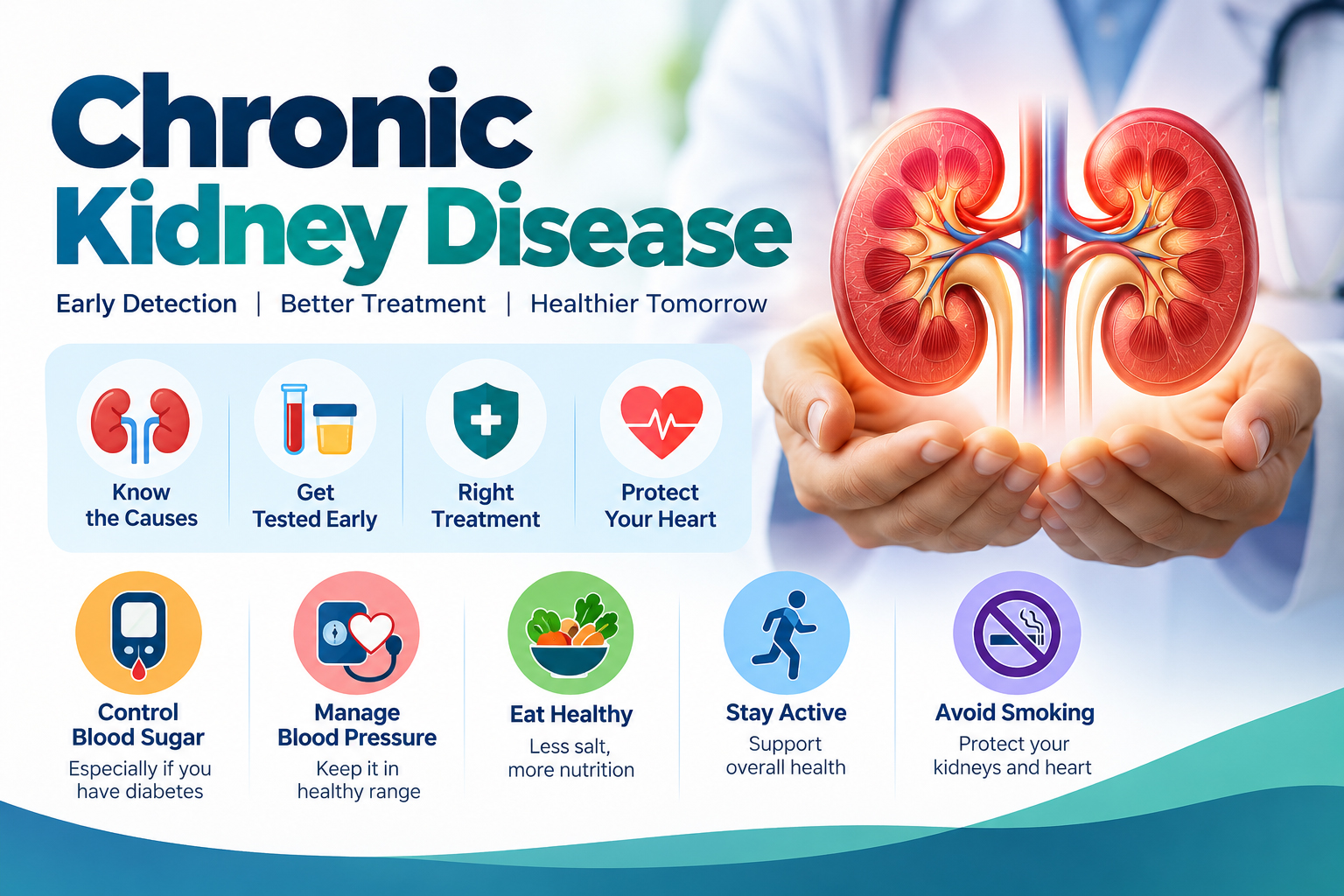
Chronic Kidney Disease
Your kidneys clean your blood and remove extra water. When they are damaged for more than 3 months, it is called chronic kidney disease (CKD).
CKD is common. About 1 in 7 adults have it. Most do not know, because early CKD has no symptoms.
What causes it?
The top two causes are:
- Diabetes (high blood sugar)
- High blood pressure
Other risks: heart disease, age over 50, obesity, and family history.
Why testing matters
CKD is silent. Simple tests find it early, when it is easiest to treat.
Screening message: If you have diabetes, high blood pressure, or heart disease, ask for two tests once a year: a blood test (eGFR) and a urine test (urine albumin). Together they can find kidney disease years before you feel sick.
Early Kidney Disease Detection Can it be treated?
Yes. Good treatments can slow CKD and protect your heart. Care includes:
- Healthy habits: less salt, more activity, no smoking
- Blood pressure control
- Blood sugar control if you have diabetes
- Kidney-protecting medicines
Starting early saves more kidney function.
When to see a kidney doctor
Your regular doctor handles most early CKD. You may see a kidney specialist (nephrologist) if your kidney function drops fast, or if you have protein or blood in your urine.
Takeaway
CKD is common, silent, and very treatable when found early. Two simple yearly tests can protect your kidneys for life.
This handout is for education only, not medical advice. Talk with your own doctor.
Sources: KDIGO 2024 Clinical Practice Guideline for CKD, Kidney International, 2024; de Boer et al., Diabetes Care (ADA/KDIGO Consensus Report), 2022.