
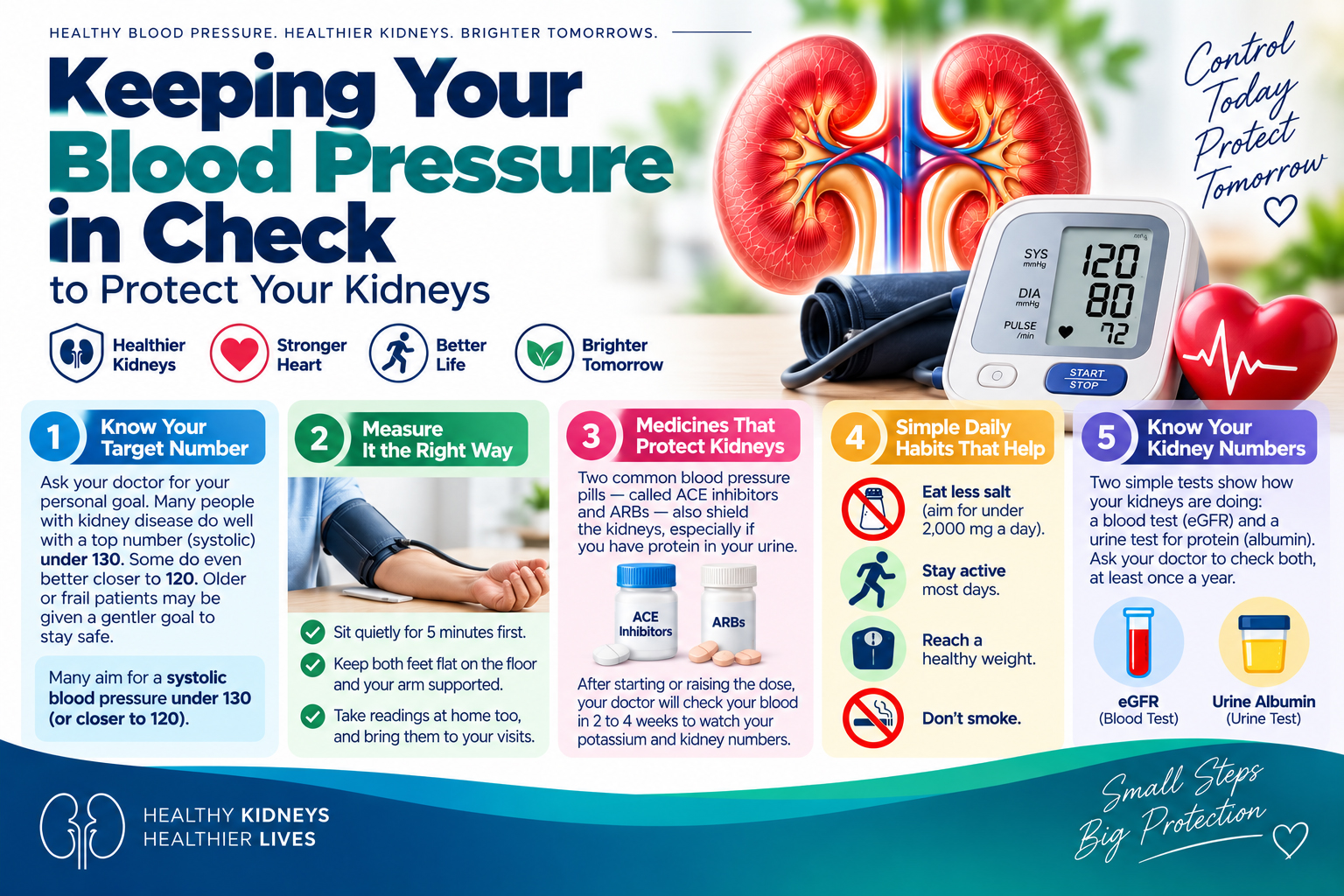
Keeping Your Blood Pressure in Check to Protect Your Kidneys
High blood pressure and kidney disease feed each other. High pressure slowly harms the tiny filters in your kidneys. And weaker kidneys push your pressure even higher. Getting your blood pressure to a healthy level is one of the best ways to protect them.
What number should I aim for?
Ask your doctor for your personal goal. Many people with kidney disease do well with a top number (systolic) under 130. Some do even better closer to 120. Older or frail patients may be given a gentler goal to stay safe. Your doctor will pick the right target for you.
How is blood pressure measured the right way?
- Sit quietly for 5 minutes first.
- Keep both feet flat and your arm supported.
- Take readings at home too, and bring them to your visits.
Medicines that protect kidneys
Two common blood pressure pills — called ACE inhibitors and ARBs — also shield the kidneys, especially if you have protein in your urine. After starting or raising the dose, your doctor will check your blood in 2 to 4 weeks to watch your potassium and kidney numbers.
Simple daily habits that help
- Eat less salt (aim for under 2,000 mg a day).
- Stay active most days.
- Reach a healthy weight and don’t smoke.
Know your numbers
Two simple tests show how your kidneys are doing: a blood test (eGFR) and a urine test for protein (albumin). Ask your doctor to check both, at least once a year.