
High Blood Pressure and Your Kidneys
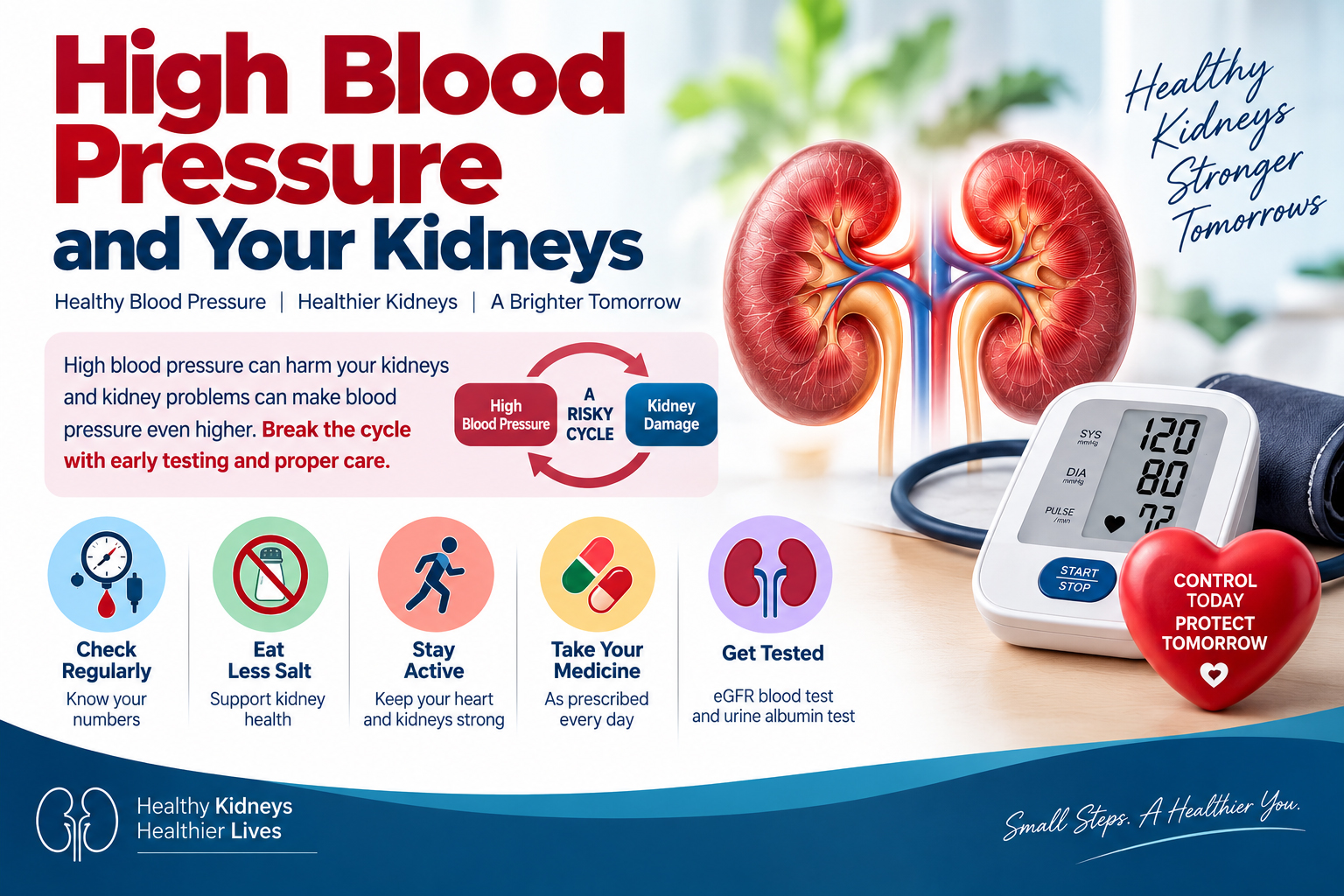
High blood pressure and kidney disease are closely linked. High blood pressure can slowly harm your kidneys. And once your kidneys are hurt, your blood pressure can climb even higher. It becomes a cycle.
How it hurts your kidneys
Your kidneys are full of tiny blood vessels that clean your blood. High pressure damages these vessels over time. When they wear out, your kidneys cannot filter waste as well. This can lead to chronic kidney disease (CKD).
The hard part: high blood pressure and early kidney damage usually cause no symptoms. You can feel fine while harm is happening. That is why testing matters.
Know your numbers
Most adults with kidney disease should aim for a blood pressure below 130. Your care team will set the right target for you. Some people benefit from an even lower number.
Simple habits help: eat less salt, stay active, and take your medicine every day. Some blood pressure pills also protect the kidneys directly.
The same screening message: Two simple tests check your kidneys — a blood test (eGFR) and a urine test (urine albumin). If you have high blood pressure, ask your doctor about these tests.
Takeaway
Control your blood pressure to protect your kidneys. Check it often, take your medicine, and get your kidneys tested.
This post is for education only. It is not medical advice. Talk with your doctor about your health.
Sources: KDIGO 2021 Blood Pressure Guideline (Kidney International, 2021); KDIGO 2024 CKD Guideline (Kidney International, 2024); Jones et al., 2025 AHA/ACC Hypertension Guideline.